When Something Isn’t Right, Knowing Where to Look Makes All the Difference.
Modern boats are increasingly complex, with electrical, charging, navigation, communication, propulsion, and networked systems all working together. When something stops working properly, replacing parts until the problem disappears isn’t troubleshooting. Effective marine electric troubleshooting means understanding how these systems interact, testing them methodically, and identifying the actual cause of the problem before deciding what needs to be repaired or replaced.
At BlueWater System Design, troubleshooting is one of our core strengths. Our ABYC Master Technician and Advanced NMEA expertise, combined with decades of hands-on marine industry experience, allows us to diagnose problems across a wide range of onboard systems. From DC and AC electrical faults, batteries, charging systems, alternators, inverter/chargers, and shore power to marine electronics, NMEA 2000 networks, communications, and integrated vessel systems, we approach the boat as a complete system rather than a collection of individual components.
Marine electric troubleshooting becomes especially important when a problem is intermittent or when the obvious component isn’t actually the source of the failure. A battery that continually goes dead may not have a battery problem. Poor charging performance can originate with wiring, connections, configuration, voltage drop, temperature compensation, alternator regulation, or several systems interacting incorrectly. Electronics that periodically disappear from a network may have an underlying power, termination, cabling, connector, or network architecture problem. Finding these issues requires looking beyond the symptom.
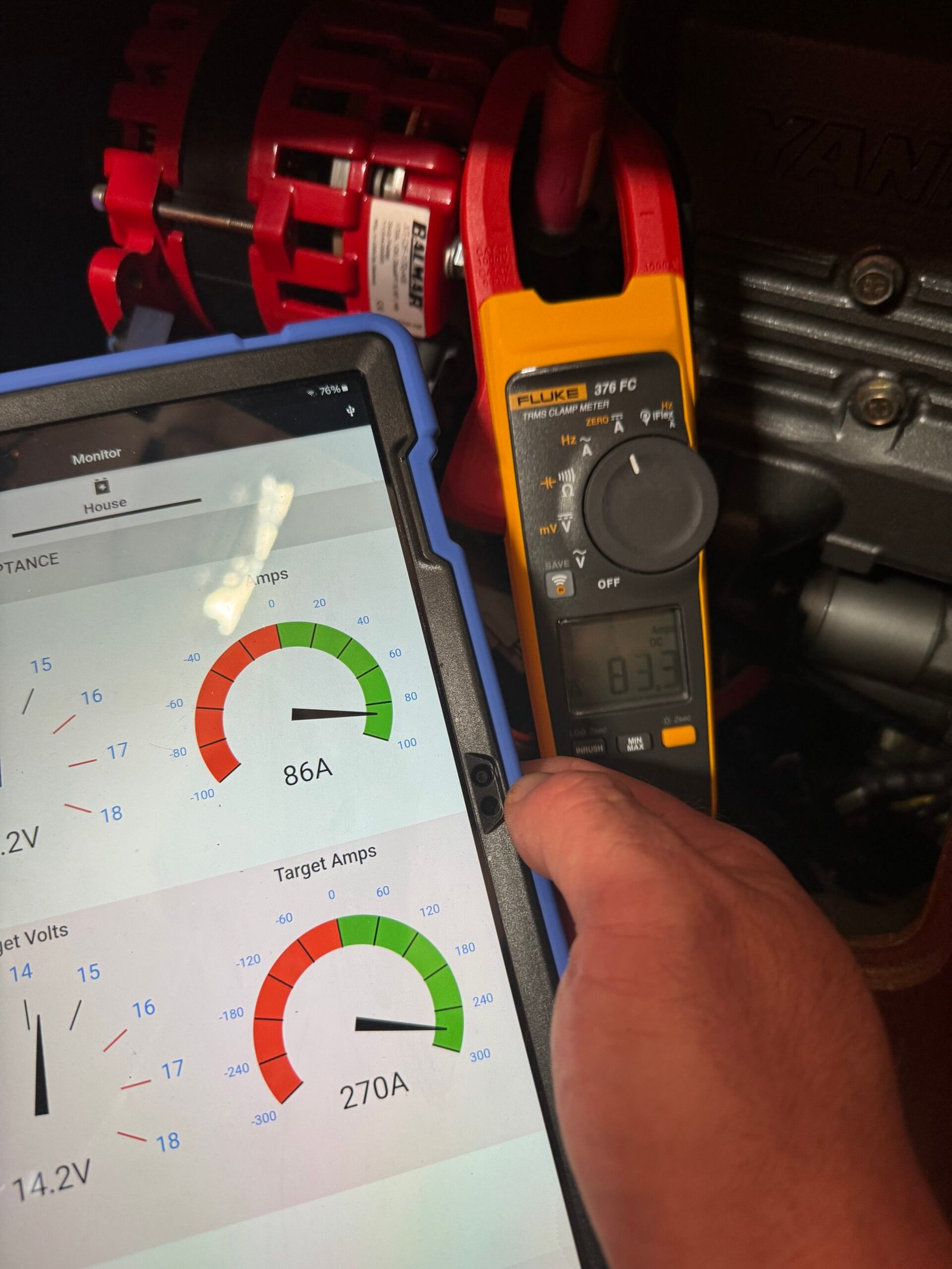
That is why we take a methodical, measurement-based approach to diagnostics. We use professional test equipment to evaluate voltage, current, resistance, insulation, continuity, voltage drop, network operation, and other system characteristics as appropriate. Thermal imaging, oscilloscopes, specialized network diagnostic equipment, and other professional tools allow us to investigate problems that may be difficult or impossible to identify through visual inspection alone.
Just as importantly, we understand what those measurements mean. Professional marine electric troubleshooting isn’t simply connecting a meter and looking for a number—it is knowing what should be happening, recognizing when something isn’t right, and understanding where to look next.
We also pay close attention to the physical installation. Loose or improperly crimped terminals, corrosion, undersized conductors, poor cable routing, inadequate circuit protection, damaged connectors, unsupported wiring, improper grounding, and previous modifications can create problems that range from annoying intermittent faults to significant reliability and safety concerns. Sometimes the component being blamed for a problem is functioning exactly as designed, while an issue elsewhere in the installation prevents it from operating correctly.
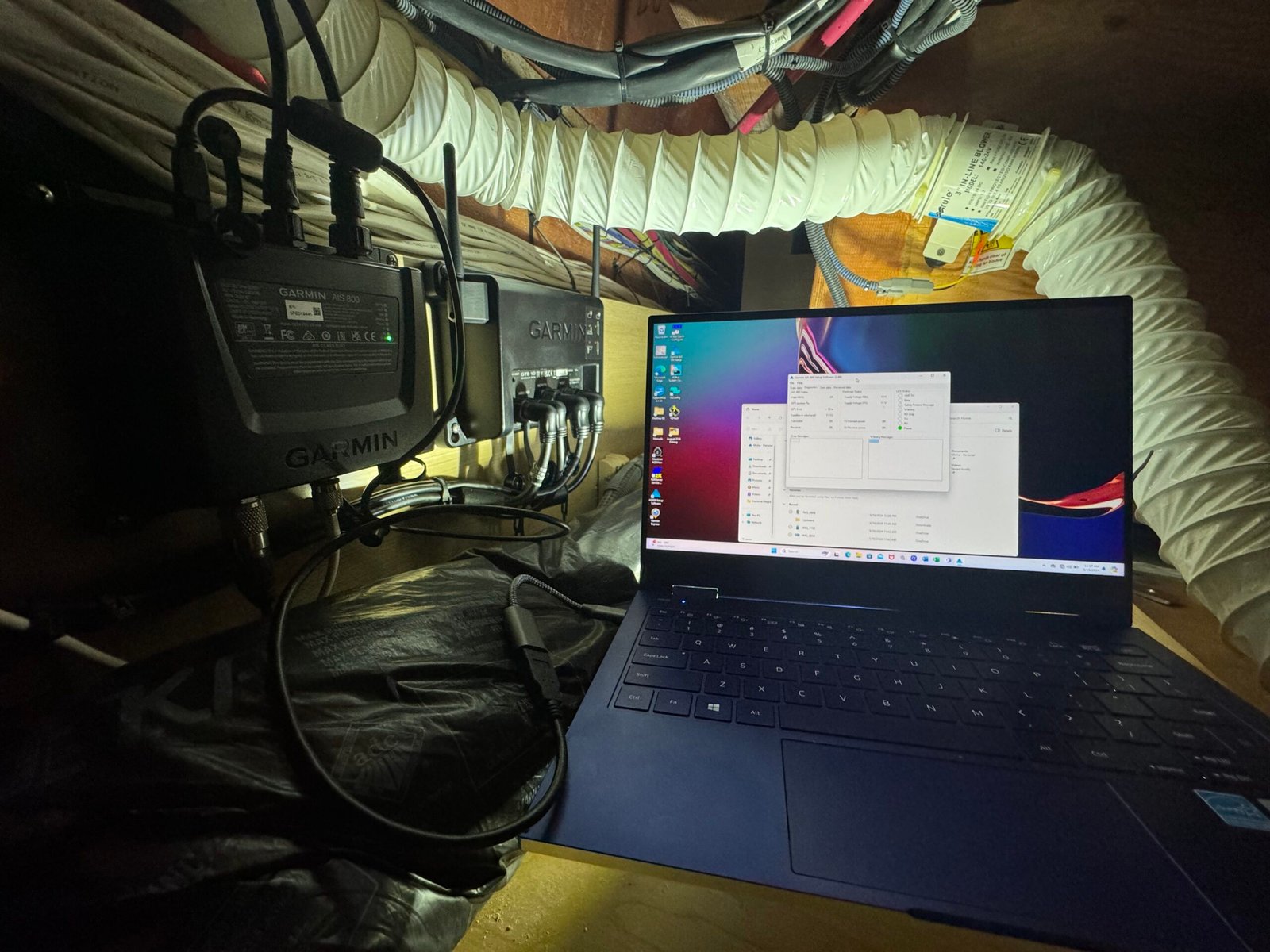
Modern marine electronics introduce another layer of complexity. Chartplotters, radar, sonar, AIS, autopilots, communications equipment, engine interfaces, sensors, monitoring systems, and other devices increasingly communicate through NMEA 2000, Ethernet, NMEA 0183, and manufacturer-specific networks. Diagnosing these systems requires an understanding of both the individual equipment and the network connecting it. Our Advanced NMEA expertise allows us to troubleshoot network architecture, power, termination, device communication, configuration, and integration issues rather than simply replacing equipment and hoping the problem disappears.
Charging and energy systems demand the same systems-level approach. Lithium and AGM battery banks, high-output alternators, solar controllers, inverter/chargers, DC-to-DC chargers, battery management systems, shore power, generators, and monitoring equipment can all interact. A problem with one component can affect the behavior of several others. Effective marine electric troubleshooting means understanding those relationships and determining whether the problem is electrical, mechanical, network-related, configuration-related, or a combination of several factors.
Documentation also matters. When schematics or accurate system information are available, we use them to understand how the vessel was designed and compare that design with what is actually installed. On vessels where years of additions and modifications have left little useful documentation, part of the diagnostic process may involve tracing circuits and identifying components and connections so that the system can be properly understood before repairs are made.
We believe a repair should also consider what happens the next time the system needs attention. When appropriate, that means correcting poor connections, improving cable management, adding identification or labeling, addressing accessibility issues, or documenting changes so the system is easier to service in the future. The objective isn’t to unnecessarily rebuild everything surrounding a fault—it is to make a proper repair and avoid leaving obvious problems behind.
Whether you’re dealing with an intermittent electrical issue, unexplained battery drain, poor charging performance, nuisance breaker trips, malfunctioning equipment, network communication problems, unreliable electronics, or an issue that another technician has been unable to resolve, BlueWater brings a disciplined approach to marine electric troubleshooting.We don’t believe in changing expensive components simply because they might be the problem. We test, measure, isolate, and verify. When we identify a failure, we want to understand what caused it and whether another underlying issue contributed to it. That distinction can prevent repeat failures, unnecessary parts replacement, and wasted labor while producing a more reliable vessel when the work is complete.
Our goal isn’t just to get it working again. It’s to understand why it failed, correct it properly, verify the repair, and leave you with a system you can depend on.